
The sub-₹60,000 electric scooter segment in India is crowded, and most listings read the same: a range figure, a motor spec, and a price. What they don't tell you is which scooter actually fits your commute, your city, and your budget for servicing three years down the line — not just the sticker price on day one.
This guide compares the StrikeCo Eco Sprint against the broader field of budget electric scooters under ₹60,000, so you can shortlist based on what actually matters for daily use, not just the number on the price tag.
Where the Eco Sprint Fits
The Eco Sprint is StrikeCo's entry-level model — built specifically as an affordable, low-maintenance option for city commuters, students, and first-time EV buyers. It's positioned at the value end of our lineup (alongside the Cresta and Verv for buyers wanting more range or power), with a focus on keeping running costs and upfront price low without cutting corners on daily usability.
Key highlights of the Eco Sprint:
Range: approximately 55-60 km per charge, suited for daily city commuting rather than long intercity runs
Three ride modes — Eco, City, and Pro — letting riders choose between maximum range and better acceleration depending on the day's needs
Automatic start/stop and one-touch reverse assist, useful for tight parking in Indian city traffic
Parking mode for easier maneuvering in narrow lanes or crowded markets
As an electric scooter manufacturer in India, we built the Eco Sprint around a simple brief: keep the price low, keep the after-sales cost lower, and don't compromise on the basics a daily rider actually uses.
The Competitive Landscape Under ₹60,000
This price band includes a genuinely wide mix of scooters, generally falling into three categories:
1. Low-speed, licence-exempt scooters
Several budget models in this segment are speed-limited (typically 25 km/h) and fall under the CMVR exemption, meaning no driving licence or RTO registration is required. These are popular with students and short-distance riders who want the lowest possible barrier to entry, but they trade off top speed and are less suited to mixed city-and-highway commutes.
2. Swappable-battery models aimed at gig and delivery riders
A number of scooters in this price range are built primarily for delivery and gig-economy use, with swappable battery networks designed for high daily mileage rather than personal commuting. They're excellent for that specific use case but often come with subscription or swap-station dependency that isn't ideal for a personal-use buyer who just wants to charge at home.
3. Full-featured personal commuter scooters
This is where the Eco Sprint competes most directly — models built for a single owner's daily commute, charged at home overnight, with a standard (non-swappable) battery, moderate range in the 55-90 km band, and features aimed at comfort and city usability rather than commercial delivery volume.
Running Cost: The Number That Actually Matters After Purchase
Upfront price differences of a few thousand rupees tend to matter far less than running cost over 2-3 years. As a rough guide, electric scooters in this segment typically cost somewhere around ₹0.20-0.30 per km to run on electricity, compared to ₹3-4 per km for an equivalent petrol scooter. Over a 20 km/day commute, that gap alone can save a rider well over ₹1,000 a month — which usually outweighs a small difference in showroom price between two budget models.
We'd recommend running this calculation with your own actual daily distance rather than relying on brochure averages, since your real savings will depend on how much you actually ride.
Our Honest Recommendation
If you're a first-time EV buyer commuting daily within city limits, want a fully licensed, standard-battery scooter you can charge at home, and are prioritising low running cost with dependable after-sales support — the Eco Sprint is built exactly for that profile.
If your primary need is licence-free riding for short local trips, or you're doing high-volume delivery work needing rapid battery swaps, those specific use cases are better served by the low-speed or swappable-battery categories respectively — and we'd rather tell you that upfront than sell you a scooter that isn't the right fit.
As an EV scooter manufacturer in India with a growing dealer network across Madhya Pradesh and beyond, our goal isn't to be the right scooter for every rider — it's to be the right scooter for the commuter the Eco Sprint was actually designed for.
Want to see the Eco Sprint in person or check current pricing at your nearest showroom? Explore the Eco Sprint or find a StrikeCo dealer near you.
Frequently Asked Questions
Q: Is the Eco Sprint a low-speed or high-speed electric scooter?
The Eco Sprint is a standard motor vehicle-classified electric scooter and requires RTO registration and a valid driving licence, unlike licence-exempt low-speed models limited to 25 km/h.
Q: What's the real-world range of the Eco Sprint?
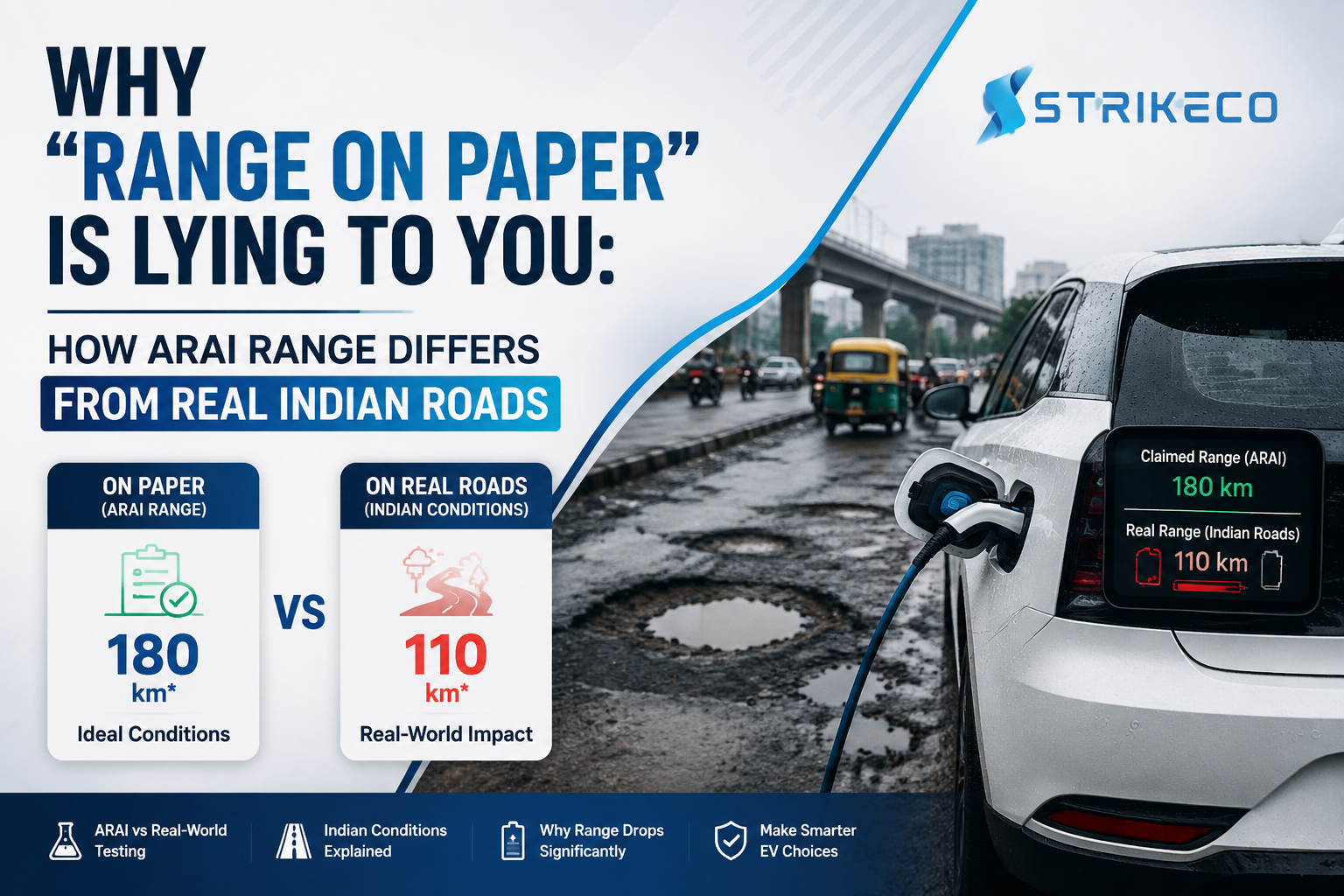
The Eco Sprint offers approximately 55-60 km per charge under typical city riding conditions; actual range will vary based on rider weight, load, traffic, and riding mode selected.
Q: Does the Eco Sprint use a lithium or lead-acid battery?
Battery specifications can vary by variant — check with your nearest StrikeCo dealer for the exact battery type and warranty terms available on current models.
Q: How does the Eco Sprint compare on running cost to a petrol scooter?
Electric scooters in this segment typically run at a fraction of petrol cost per kilometre, and most riders recover the price difference through fuel savings within the first year of regular use.
Q: Where can I check the current on-road price of the Eco Sprint?
On-road pricing varies by state due to registration and local charges. Contact your nearest StrikeCo dealer or visit the Eco Sprint page for the latest pricing in your city.