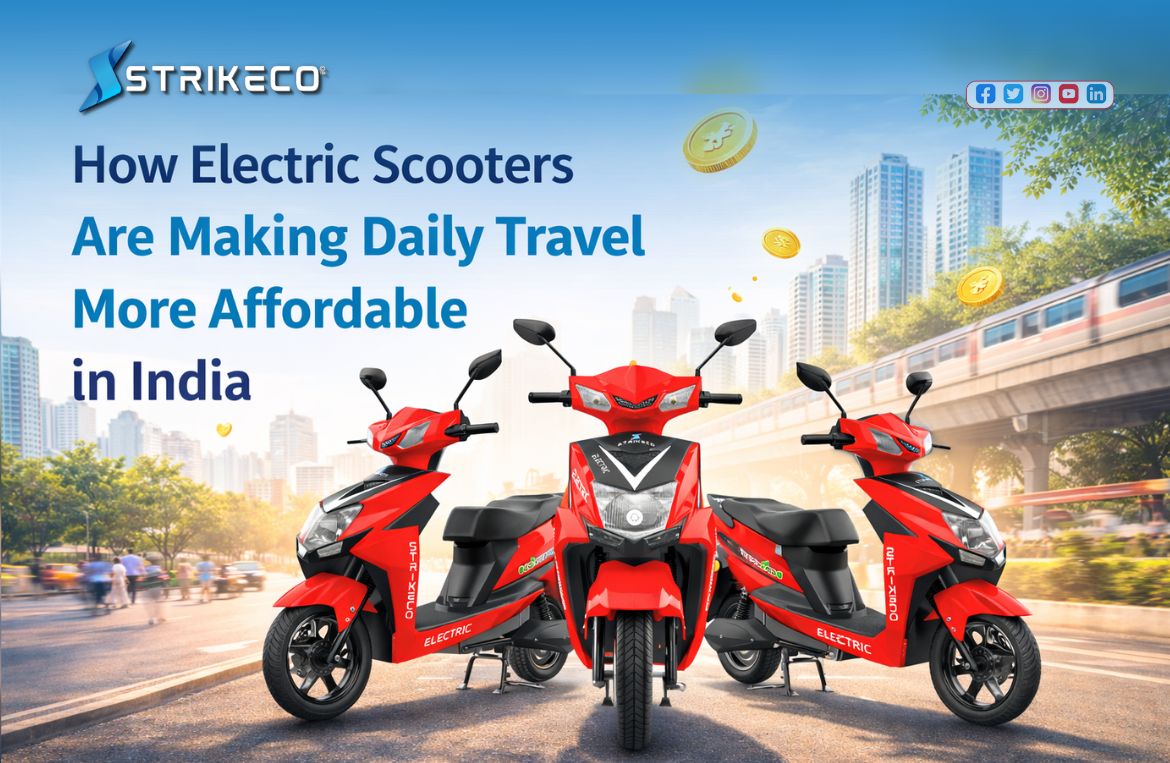
In India, daily commuting is a major expense for millions of people. From rising petrol prices to increasing maintenance costs, traditional petrol scooters are becoming harder to sustain for everyday travel. This is where electric scooters in India are emerging as a game-changer. Affordable, efficient, and easy to maintain, electric scooters are transforming how Indians commute every day.
This blog explores how electric scooters are reducing daily travel costs, why they make financial sense for Indian riders, and how they are shaping the future of affordable urban mobility.
Over the past few years, petrol prices in India have remained consistently high. For daily commuters who travel 20–40 km every day, fuel costs alone take up a significant portion of monthly income.
Petrol scooters typically cost several rupees per kilometre to run. Over a month, this adds up quickly, especially for students, office-goers, delivery partners, and small business owners.
Electric scooters in India eliminate this burden by replacing petrol with electricity—a much cheaper energy source. This single shift drastically reduces daily commuting expenses.
One of the strongest financial advantages of electric scooters is their low running cost.
For riders covering long distances daily, the savings are immediate and long-term. Over a year, electric scooter owners can save thousands of rupees purely on fuel expenses.
Charging an electric scooter is simple and economical. Most electric scooters can be charged at home using a standard 5A power socket.
A full charge usually costs only a few rupees and provides enough range for daily travel. Compared to frequent petrol refills, home charging offers unmatched convenience and cost savings.
This makes electric scooters especially suitable for:
Electric scooters have fewer moving parts compared to petrol scooters. There is no engine, clutch, gearbox, or exhaust system.
This leads to:
Routine maintenance is limited to brakes, tyres, and basic inspections. For daily riders, this reliability translates into consistent savings over the scooter’s lifespan.
Petrol prices fluctuate frequently, making it difficult for commuters to plan monthly travel expenses. Electric scooter owners are largely unaffected by these price changes.
Electricity costs are more stable and predictable, allowing riders to budget their commuting expenses with confidence. This financial predictability is a major advantage for middle-income families and salaried individuals.
The Indian government actively promotes electric mobility through subsidies and incentives. Many electric scooters in India qualify for central and state-level benefits.
Common incentives include:
These benefits make electric scooters more accessible and affordable for first-time buyers and cost-conscious commuters.
Most daily travel in Indian cities involves short to medium distances—office commutes, college travel, errands, and local deliveries.
Electric scooters are designed specifically for such usage. With improving battery technology, modern electric scooters easily handle daily travel needs without frequent charging.
This efficiency ensures that riders spend less on transportation while enjoying reliable mobility.
While the initial cost of an electric scooter may seem similar to petrol scooters, the long-term savings are substantial.
Over 3–5 years of ownership, riders save on:
These cumulative savings make electric scooters a smarter financial investment for daily commuters.
Students and early-career professionals often operate on tight budgets. Electric scooters offer them independence without high recurring costs.
With low charging expenses and minimal servicing, electric scooters allow young riders to manage daily travel without financial strain.
This affordability is a key reason why electric scooters are gaining popularity among India’s youth.
Public transport in Indian cities can be crowded, time-consuming, and inconsistent. Electric scooters provide a cost-effective alternative for daily commuting.
Riders enjoy:
All of this comes at a lower cost than daily cab rides or petrol-based commuting.
Charging infrastructure across India is steadily improving. Many cities now have public charging stations in residential areas, offices, and commercial hubs.
This growing ecosystem makes electric scooters even more practical for daily travel and reduces concerns about range and accessibility.
Electric scooters not only save money but also reduce environmental impact. Zero tailpipe emissions help lower pollution levels in cities.
For riders, this means contributing to a cleaner environment while enjoying lower commuting costs—a win-win situation.
As electric mobility continues to grow, electric scooters are becoming a standard mode of transport rather than a niche option.
Improving battery life, better resale value, and increasing acceptance ensure that electric scooters remain relevant and valuable in the long run.
The shift toward electric scooters in India is driven by practical financial benefits. Lower running costs, reduced maintenance, stable energy pricing, and government support make them the most affordable option for daily travel.
For millions of Indians, electric scooters are not just an eco-friendly choice—they are a smart economic decision.
Electric scooters are reshaping daily travel in India by making commuting more affordable, predictable, and efficient. From students to professionals, riders across demographics are discovering how electric scooters help them save money without compromising on convenience.
As fuel prices rise and cities grow more congested, electric scooters stand out as the future of affordable urban mobility in India.
If you’re looking to reduce your daily travel expenses and enjoy hassle-free commuting, now is the perfect time to switch to an electric scooter. Explore models that suit your needs, check available subsidies in your state, and experience how electric scooters can make everyday travel more affordable.

