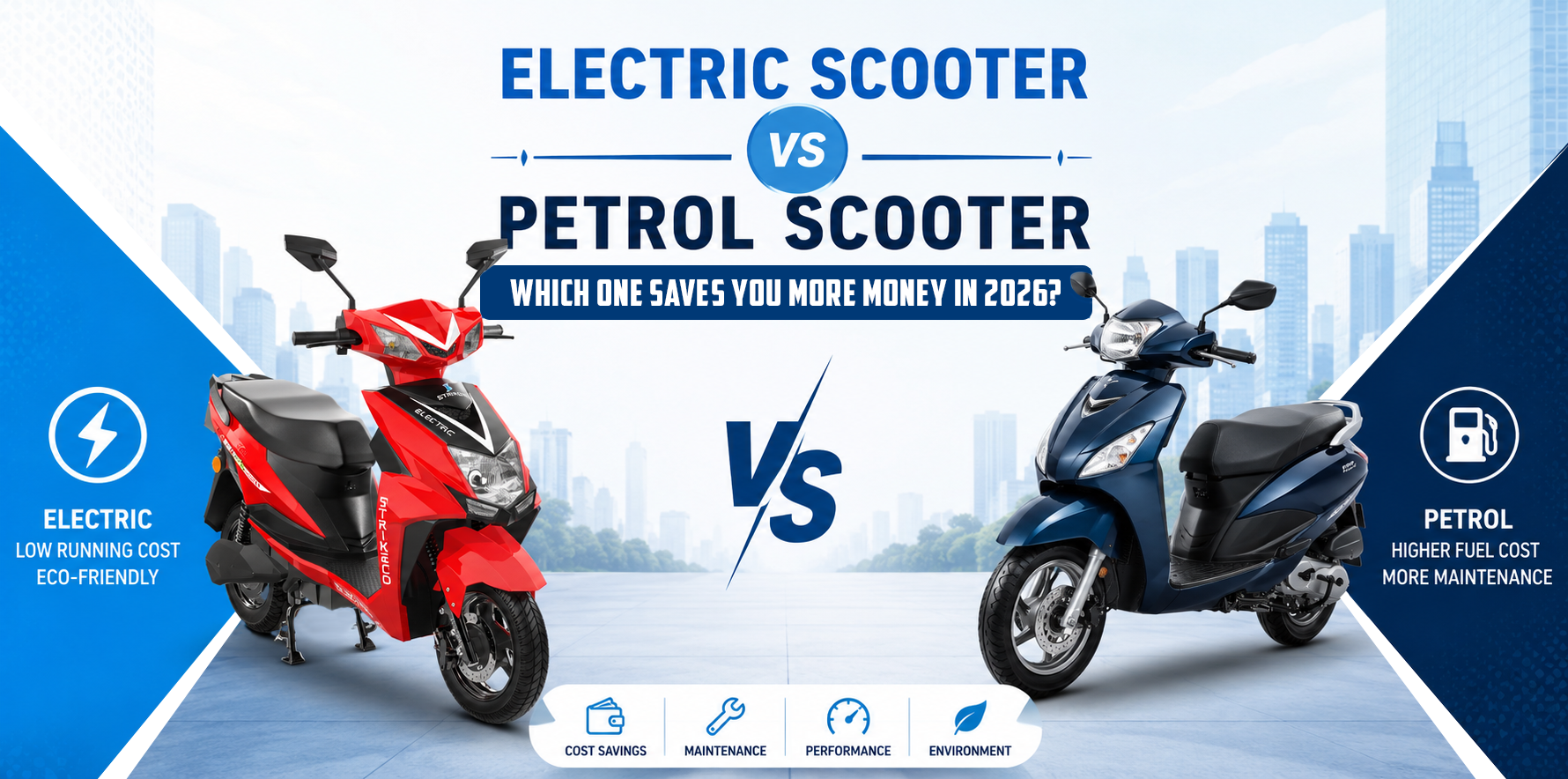
The Indian two-wheeler market is changing rapidly. With rising fuel prices, increasing environmental awareness, and major improvements in electric vehicle technology, buyers in 2026 are asking one important question:
Should you buy an electric scooter or continue using a petrol scooter?
For years, petrol scooters dominated Indian roads because of convenience and familiarity. However, electric scooters are now becoming mainstream due to lower running costs, smart technology, and government support for EV adoption.
When comparing electric scooters and petrol scooters, the real discussion goes beyond purchase price. Buyers today evaluate:
Long-term savings
Fuel or charging expenses
Maintenance costs
Battery replacement
Performance
Environmental impact
Resale value
This guide breaks down the complete cost comparison between electric scooters and petrol scooters in 2026 to help you make a smarter financial decision.
Understanding the Initial Purchase Cost
Traditionally, petrol scooters were considered more affordable upfront. However, the pricing gap has reduced significantly in recent years.
Petrol Scooter Pricing in 2026
Most mid-range petrol scooters in India now cost between:
₹85,000 to ₹1.3 lakh (on-road)
Electric Scooter Pricing in 2026
Modern electric scooters are available from:
₹75,000 to ₹1.5 lakh depending on battery size and features
Thanks to improved local manufacturing and EV incentives, electric scooters have become much more accessible to average buyers.
While some premium EV models may still cost slightly more initially, long-term ownership cost tells a very different story.
Fuel Cost vs Charging Cost
This is where electric scooters create a major financial advantage.
Petrol Scooter Running Cost
Average petrol scooter mileage:
40–50 km per litre
Average petrol price in India (2026 projected):
₹110–₹120 per litre
Approximate running cost:
₹2.5 to ₹3 per km
Electric Scooter Running Cost
Average electricity cost:
₹7–₹10 per unit
Typical charging cost per full charge:
₹15–₹30
Average EV range:
80–120 km
Approximate running cost:
₹0.20 to ₹0.40 per km
This difference becomes massive over long-term daily usage.
For commuters traveling 1,000 km per month:
Petrol Scooter
₹2,500–₹3,000 monthly fuel expense
Electric Scooter
₹250–₹500 monthly charging expense
Annual savings can easily cross ₹25,000 or more.
Maintenance Cost Comparison
Maintenance is another major factor where electric scooters outperform petrol vehicles.
Petrol Scooter Maintenance
Petrol scooters contain multiple moving parts including:
Engine oil systems
Clutch components
Spark plugs
Air filters
Gear systems
Exhaust systems
Regular servicing includes:
Oil changes
Engine maintenance
Filter replacement
Mechanical repairs
Annual maintenance costs can become substantial over time.
Electric Scooter Maintenance
Electric scooters have:
Fewer moving parts
No engine oil
No exhaust system
Simpler drivetrain
Maintenance mainly includes:
Brake checks
Tyre replacement
Software updates
Battery monitoring
As a result, EV maintenance costs are significantly lower.
Battery Replacement: The Biggest EV Concern
One common concern among buyers is battery replacement cost.
Modern electric scooters now use advanced:
Lithium-ion batteries
LFP batteries
Smart battery management systems (BMS)
Battery lifespan has improved considerably.
Most EV batteries today offer:
5–8 years lifespan
Thousands of charging cycles
Long warranty coverage
While battery replacement can be expensive, the money saved on fuel and servicing often offsets this cost over time.
Daily Commuting Economics
Electric scooters are especially cost-effective for:
Office commuters
Students
Delivery riders
Urban travelers
Frequent stop-and-go city traffic affects petrol efficiency negatively, whereas electric scooters maintain strong efficiency in urban conditions.
For high daily usage, EV savings increase dramatically.
Environmental Impact and Sustainability
Environmental concerns are becoming increasingly important in vehicle purchasing decisions.
Petrol Scooters
Produce:
Carbon emissions
Noise pollution
Fuel dependency
Electric Scooters
Offer:
Zero tailpipe emissions
Lower noise pollution
Cleaner urban mobility
As Indian cities focus more on sustainability, EV adoption is expected to rise rapidly.
Smart Features and Technology
Electric scooters are also becoming more technologically advanced than many traditional scooters.
Modern EV features include:
Digital dashboards
GPS tracking
Mobile app integration
Anti-theft systems
Reverse assist
OTA software updates
Regenerative braking
Petrol scooters are improving technologically, but EVs currently lead in smart mobility integration.
Charging Convenience vs Fuel Refilling
Petrol scooters benefit from widespread fuel station availability. Refueling takes only a few minutes.
However, electric scooter charging infrastructure is improving rapidly across India.
Benefits of EV charging:
Home charging convenience
Lower charging cost
Overnight charging capability
Most urban users now find daily charging manageable.
Government Policies and EV Incentives
Government support continues to favor electric mobility.
Benefits include:
State EV subsidies
Reduced registration fees
Lower road taxes
Charging infrastructure expansion
These incentives improve EV affordability and long-term savings.
Performance Comparison
Performance expectations vary by user.
Petrol Scooters
Strengths:
Longer uninterrupted riding range
Faster refueling
Better highway familiarity
Electric Scooters
Strengths:
Instant torque
Smooth acceleration
Silent operation
Better city performance
For urban commuting, electric scooters often provide a more refined riding experience.
Resale Value Considerations
Resale trends are evolving quickly.
Petrol scooters still hold established resale markets, but demand for EVs is increasing steadily due to rising fuel prices and improved battery reliability.
As EV adoption grows, electric scooter resale value is expected to strengthen further.
Which Option Saves More Money in 2026?
For most city riders, electric scooters clearly offer better long-term savings due to:
Lower running cost
Minimal maintenance
Reduced servicing expenses
Government incentives
Better efficiency in traffic
Petrol scooters may still suit:
Long-distance rural riders
Areas with limited charging access
Buyers prioritizing ultra-fast refueling
However, for urban commuting and daily usage, electric scooters are becoming the more economical choice.
Future of Urban Mobility in India
India’s transportation ecosystem is shifting toward electrification.
Key trends include:
Faster charging technologies
Improved battery safety
Better affordability
AI-based vehicle diagnostics
Expanded charging networks
Electric scooters are expected to dominate short-distance urban mobility in the coming years.
Choosing between an electric scooter and a petrol scooter in 2026 depends on your riding habits, commuting needs, and long-term financial priorities.
If your goal is:
Lower operating expenses
Reduced maintenance
Better urban efficiency
Sustainable transportation
then electric scooters offer a strong financial advantage.
As EV technology continues improving, the savings gap between electric and petrol vehicles will likely become even larger.
Careful research and smart evaluation today can lead to significant savings and a more future-ready commuting experience tomorrow.